




Microsoft's Marketplace Is Not the Same Channel It Was Two Years Ago
If your mental model of Microsoft's commercial marketplace was formed before 2025, it needs an update. The platform has changed substantially — structurally, in terms of buyer behavior, and in the GTM programs available to ISVs.
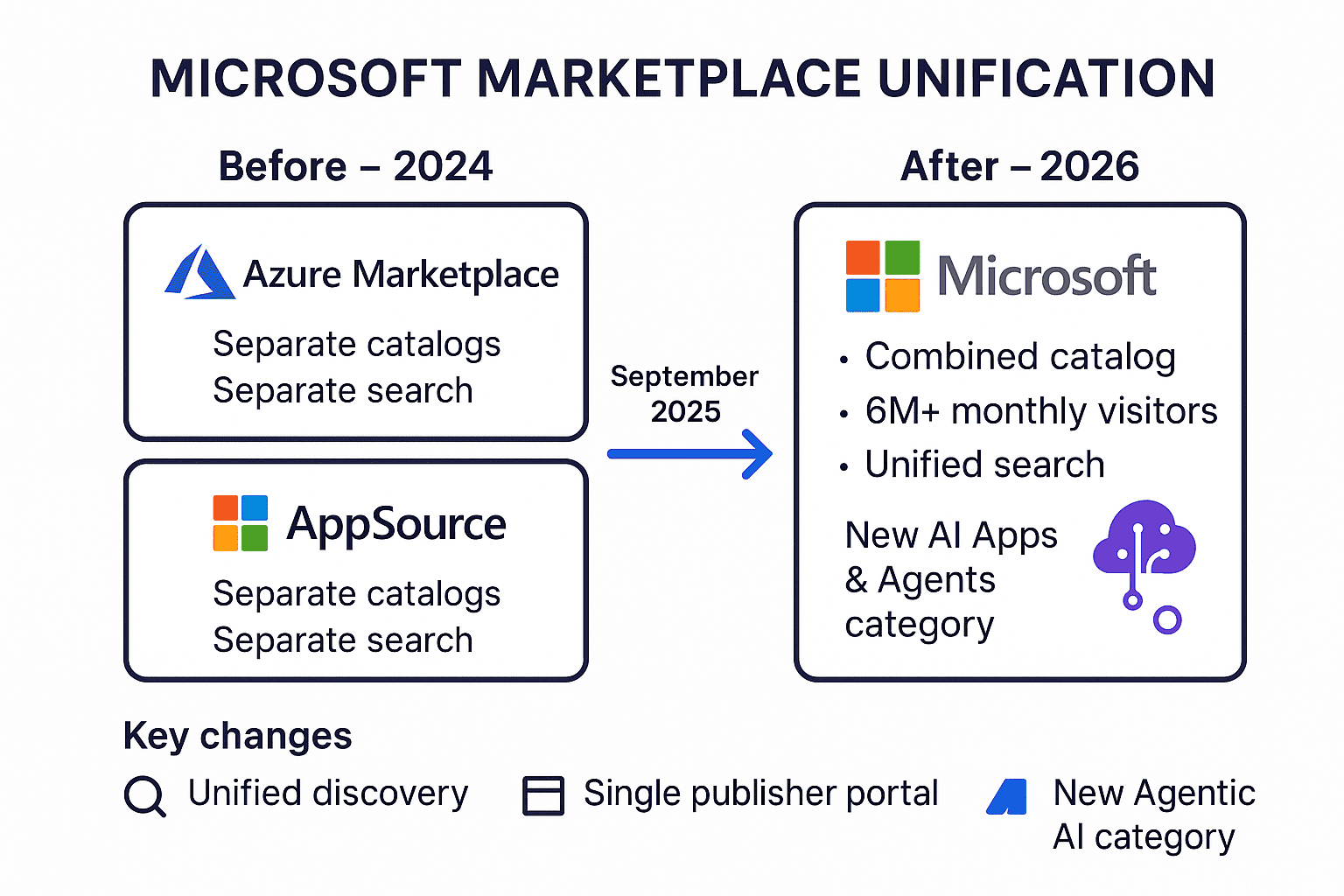
Microsoft's commercial marketplace now serves over 6 million unique monthly visitors, has achieved meaningful transaction volume growth driven by enterprise committed spend (MACC), and has launched a dedicated category for AI applications.
The Biggest Structural Change: Unification
For years, Microsoft operated two separate storefronts: Azure Marketplace (infrastructure and developer tools) and AppSource (business applications). In September 2025, Microsoft completed the unification under a single commercial marketplace experience.
If you want a faster path through the analysis, the Marketplace Readiness Assessment is free and takes under five minutes to assess your readiness before investing in listing work.
What This Means for ISVs
- Single listing management through a unified Partner Center interface
- Broader discovery surface — buyers see both infrastructure and business apps in a single results page
- New category definitions that don't map 1:1 to old categories
The AI Apps and Agents Category
Microsoft launched AI Apps & Agents as a standalone first-tier category in late 2025. The category includes AI-powered SaaS applications, LLM-based agent frameworks, AI infrastructure tools, and Copilot extensions.
Discovery volume in this category is growing at rates that significantly outpace the marketplace average.
The App Accelerate Program
Microsoft's program tiers: Marketplace Listed (basic), Co-Sell Eligible (formal co-sell), IP Co-Sell Eligible (enhanced with MACC eligibility), and Azure Expert MSP. The step change in value happens at IP Co-Sell Eligible — where Microsoft field sales has direct incentive to co-sell your product.
Private Offers Updates
- Multiparty Private Offers (MPOs) are now generally available — the Azure equivalent of AWS CPPO
- Installment payment plans are now more flexible for enterprise procurement
- Subscription auto-renewal improvements reduce renewal negotiation burden
MACC Eligibility: The Enterprise Deal Accelerator
When an enterprise has a MACC agreement, purchases through the commercial marketplace count toward their balance. Your listing must be transactable, available as SaaS or Azure application, and published by an IP Co-Sell Eligible partner for maximum deal acceleration.
What You Need to Do Differently in 2026
- Audit your category selections after the unification
- Evaluate the AI Apps & Agents category for your product
- Set IP Co-Sell Eligible as your target, not just Co-Sell Eligible
- Enable Multiparty Private Offers if you have a channel
- Position MACC eligibility in every enterprise deal
- Review technical requirements against your current implementation
How Automatum Supports Microsoft Marketplace
Automatum's platform covers the full Microsoft Marketplace operational layer: technical integration, subscriber lifecycle, private offer management (including MPOs), and co-sell workflow. We support multi-cloud listings, so if you're active on both AWS and Azure, you manage everything from one place.
Automatum simplifies cloud marketplace operations across AWS, Azure, and GCP.
Book a Working Session →Frequently Asked Questions
Common questions about the topics covered in this guide.
What changed on Microsoft Marketplace in 2026?
Key changes include marketplace unification across Azure Marketplace and AppSource, the new AI Apps category, the App Accelerate program for co-sell, expanded MPO capabilities, and broader MACC eligibility criteria.
What is the Microsoft AI Apps category?
AI Apps is a dedicated marketplace category for AI-native applications launched in 2026. It provides increased visibility for AI products and connects them with enterprise buyers actively seeking AI solutions on Azure.
What is the App Accelerate program?
App Accelerate is Microsoft's enhanced co-sell program that provides ISVs with direct access to Microsoft field sellers, joint marketing opportunities, and financial incentives for marketplace-transacted deals.
How does MACC expansion affect ISVs?
The 2026 MACC expansion broadened the types of marketplace purchases that count toward Azure committed spend, making more ISV products eligible and increasing the pool of buyers who can use committed spend for software purchases.
Keep building your marketplace motion
Azure Marketplace guides for ISVs building their Microsoft channel.