


- An ISV (independent software vendor) builds and sells its own software. It becomes an ISV partner when it joins a cloud provider’s partner program to list, co-sell, and market through AWS, Azure, or GCP.
- An ISV is not a reseller and not a system integrator. The three roles get bundled under “partner,” but they sell different things and get paid differently.
- Each cloud runs its own tiered program (Registered → Select → Advanced → Premier, roughly). Higher tiers unlock more funding, co-sell access, and marketplace visibility.
- The relationship is worth joining once you have a marketplace listing to co-sell — the tier by itself does nothing until you have a product buyers can transact.
A founder emails their AWS contact asking to “become a partner,” gets pointed at a signup form, checks a box, and assumes the leads will follow. Six weeks later nothing has changed — because signing up for a partner program and being an ISV partner that actually co-sells are two very different things. So: what is an ISV partner, in plain English? It is a software company that has joined a cloud provider’s program to sell its own product through that cloud — and this guide untangles what that means, how it differs from a reseller or an integrator, and what the relationship actually gets you.
What is an ISV partner, exactly
Start with the acronym. ISV stands for independent software vendor: a company whose business is building and selling its own software product. “Independent” is the load-bearing word — the software is the ISV’s own intellectual property, not a rebranded version of someone else’s, and not a services engagement billed by the hour.
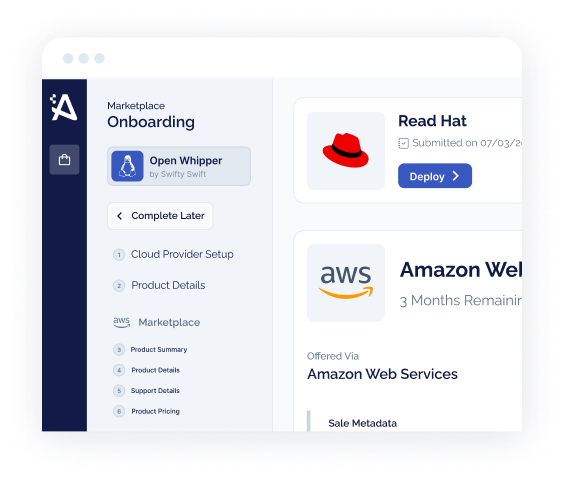
An ISV becomes an ISV partner when it formally joins a cloud provider’s partner program — AWS Partner Network, the Microsoft AI Cloud Partner Program, or Google Cloud Partner Advantage. That partnership is the mechanism for three things: the right to publish a listing on the provider’s marketplace, access to co-selling with the provider’s field sales teams, and eligibility for funding, technical support, and marketing benefits. If any of those terms feel fuzzy, our cloud marketplace glossary defines them one by one.
An ISV partner is a software company that has joined a cloud provider’s program so it can list, co-sell, and market its own product through that cloud — while keeping full ownership of the software itself.
ISV vs reseller vs system integrator
Here is where most newcomers get lost. Cloud providers file ISVs, resellers, and system integrators (SIs) under the same “partner” umbrella, but they play three different games. Confusing them leads to picking the wrong program, the wrong contract, and the wrong revenue expectations.
ISV
Builds and owns a software product. Sells its own IP, often as SaaS. Gets paid through product sales and marketplace listings. This is you if you have your own app.
Reseller
Sells someone else’s product to end customers, usually for a margin. Owns the customer relationship and the invoice, not the software. Think channel and distribution.
System Integrator
Sells services: implementation, migration, custom builds, managed operations. Bills for expertise and hours, not for a product it owns.
A quick test settles almost every case: what are you selling, and who owns it? If you sell software you built, you are an ISV. If you sell software someone else built, you are a reseller. If you sell the work of putting software to use, you are an SI. Many mature companies wear more than one hat — an ISV can also resell adjacent tools, and an SI can spin up its own product — but the partner program you join should match your primary motion.
The fastest way to waste a quarter is to join the wrong partner track — the reseller path optimizes for margin on other people’s software, and it will not help you sell your own.
Why does this distinction matter so much in practice? Because the benefits are role-specific. Marketplace listing rights, private-offer tooling, and ISV co-sell programs are built for people selling their own product. A reseller agreement gives you none of that — it gives you the right to transact other catalog items. If you are an ISV who accidentally signs up as a reseller, the tools you actually need simply will not appear in your console.
How partner tiers work across AWS, Azure, and GCP
Every major cloud runs a tiered program, and the tiers are more alike than the marketing suggests. You typically start at an entry level for free, then climb as you demonstrate certifications, customer wins, and marketplace revenue. Each rung up unlocks more: bigger funding pools, deeper co-sell access, better marketplace placement, and a named partner manager instead of a shared inbox.
| Cloud program | Entry tier | Top tier | Climbs on |
|---|---|---|---|
| AWS Partner Network | Registered | Premier | Certifications, validated customer wins, marketplace revenue |
| Microsoft AI Cloud Partner Program | Member | Solutions Partner / specializations | Certifications, performance metrics, customer usage |
| Google Cloud Partner Advantage | Registered | Premier | Certifications, revenue, customer success evidence |
Two things are worth internalizing before you obsess over which tier to chase. First, tiers are a consequence of a working motion, not a cause — provider field teams co-sell with partners who bring them deals, and the tier badge follows the revenue, not the other way around. Second, the real unlock for an ISV is the marketplace listing that makes co-selling possible in the first place. If you are still deciding whether that listing is worth it, our guide to what a cloud marketplace actually is in 2026 lays out the mechanics.
Do not spread across all three clouds on day one. Pick the cloud where your customers already have committed spend, get one listing live, and earn the tier there. Multi-cloud partner status is a milestone you grow into — not a starting line.
What the ISV partner relationship actually gets you
Strip away the badges and the tier names, and the ISV partner relationship delivers four concrete things. These are the reasons the paperwork is worth it.
- Marketplace listing rights — the ability to publish your product on AWS, Azure, or GCP Marketplace so customers can buy it against their existing cloud commitment
- Co-sell access — the provider’s field sellers can source, register, and help close deals for your product; done well, this turns the cloud’s sales force into an extension of yours
- Funding & incentives — marketing development funds, proof-of-concept credits, and migration funding that offset go-to-market cost
- Technical & program benefits — architecture support, training credits, and early access to services and beta programs
Of these, co-sell is the one people underestimate. It is also the one that takes real work to switch on — a listing is a checkbox, but co-sell is a relationship. If you want the zero-to-first-deal version, we walk it end to end in co-selling with cloud providers from zero to revenue.
Consider a typical seed-stage data-tooling ISV with a working product and a handful of paying customers. They join one cloud’s partner program at the entry tier, publish a marketplace listing, and register their next two enterprise deals for co-sell. Because those buyers can now transact against existing cloud budget, procurement moves faster, and the provider’s rep brings a warm intro to a third account. None of that required a top tier — it required a live listing plus a motion the provider could plug into.
Now take the mirror-image case: a mid-market ISV that spends a quarter chasing an Advanced badge for the prestige, racks up certifications, but never publishes a transactable listing. The badge sits on the website; the pipeline does not move. The lesson is not that tiers are worthless — it is that they are an amplifier, and an amplifier turned up on a signal of zero is still zero.
Choosing your first partner program
If you are an ISV deciding where to start, the decision is smaller than it looks. You are not choosing a lifelong marriage; you are choosing where to run your first real motion.
Follow the committed spend
Start with the cloud where your target buyers already have a committed budget. Marketplace purchases that draw down that commitment close faster than net-new spend.
Confirm you are on the ISV track
Not reseller, not services. The console you want should let you create a product listing and private offers, not just transact other people’s catalog.
Get one listing live before chasing tier
A transactable listing is what makes co-sell and funding real. Tier follows revenue, not the other way around.
Assign an owner
Partner programs reward consistent engagement — deal registration, co-sell hygiene, certification upkeep. A part-time afterthought stalls.
Not sure how ready your go-to-market motion is for any of this? The Cloud GTM Maturity Score gives you a quick, honest read before you commit a quarter to a partner program.
Being an ISV partner is the paperwork. Running the motion is the work.
Automatum runs the operational layer of ISV partnership — marketplace listings, private offers, co-sell registration, and disbursement reconciliation — across AWS, Azure, and GCP, so your partner status turns into actual pipeline instead of a badge on a page. See how it fits your stack on the platform overview.
See Automatum in Action →Frequently Asked Questions
Common questions about what an ISV partner is and how the programs work.
What is an ISV partner in simple terms?
An ISV partner is an independent software vendor — a company that builds and sells its own software — that has joined a cloud provider’s partner program (like AWS Partner Network, the Microsoft AI Cloud Partner Program, or Google Cloud Partner Advantage). That membership lets the ISV list its product on the provider’s marketplace, co-sell with the provider’s sales teams, and access funding and technical benefits, while keeping full ownership of its software.
What is the difference between an ISV and a reseller?
An ISV builds and sells its own software product. A reseller sells someone else’s product to end customers, usually for a margin, and owns the customer relationship and invoice rather than the software. The simple test: if you sell software you built, you are an ISV; if you sell software someone else built, you are a reseller.
Do ISV partner tiers matter, or just the listing?
Both, but in order. A transactable marketplace listing is what makes co-selling and funding real, so it comes first. Tiers (Registered, Select, Advanced, Premier and their equivalents) amplify a working motion with more funding, co-sell access, and visibility — but a high tier with no listing produces no pipeline. Earn the listing, and the tier tends to follow the revenue.
Can a company be more than one type of partner?
Yes. A single company can be an ISV, a reseller, and a system integrator at once — for example, an ISV that resells adjacent tools and also offers implementation services. The important thing is to join the partner track that matches your primary motion, because benefits like marketplace listing rights and ISV co-sell are role-specific.
Keep building your cloud partner motion
Guides on marketplace terms, how marketplaces work, and getting to first co-sell revenue.