



Why Retention Is Different on Cloud Marketplaces
Customer retention for ISVs selling through cloud marketplaces operates under fundamentally different dynamics than retention in traditional direct-sales channels. The marketplace layer introduces unique variables, including simplified cancellation paths, competitive alternatives just a click away, commitment drawdown mechanics, and procurement-level renewal decisions that bypass end-user sentiment.
Understanding these differences is the prerequisite for building a customer success program that actually works in the marketplace context.
In a direct-sales model, cancellation typically requires contacting sales or support, navigating a retention conversation, and often working through contractual exit terms. On a cloud marketplace, a buyer can cancel a subscription through their AWS, Azure, or GCP console in minutes with no human interaction.
This low-friction cancellation path means that dissatisfied customers do not smolder quietly; they leave quickly and often without warning. The implication for ISVs is that reactive retention strategies, like deploying a save team when a cancellation request comes in, are far less effective on marketplaces because the cancellation has already happened before you know about it.
Marketplace retention is also influenced by commitment drawdown economics. Buyers who purchased your product as part of a cloud committed spend agreement (EDP, MACC, or CUD) may view the purchase differently than a standalone software investment.
If the commitment period ends and the buyer does not renew their cloud agreement, or if they restructure their commitment allocation, your product's marketplace subscription may be deprioritized.
Conversely, buyers with active commitments may renew by default simply to consume their allocated spend, even if active usage has declined. This creates a retention illusion where subscription continuity masks declining engagement, ultimately leading to a more severe churn event when the commitment period expires.
Understanding Marketplace-Specific Churn Signals
Traditional churn prediction models, built on login frequency, feature adoption, and support ticket sentiment, remain relevant for marketplace customers but must be supplemented with marketplace-specific signals that capture the unique dynamics of marketplace purchasing behavior.
If you want a faster path through the analysis, the Marketplace ROI Calculator is free and takes under five minutes to project your marketplace revenue and payback timeline.
Usage Decline Relative to Commitment
For customers on committed spend agreements, track the ratio of actual product usage to committed spend allocation. A customer who committed $50,000 annually but is only consuming $15,000 in usage is at high churn risk, not because they are unhappy today, but because they will question the allocation at renewal time.
This signal is often invisible to product-level analytics and requires integration with marketplace billing data to detect.
Procurement Calendar Awareness
Marketplace subscriptions are often governed by organizational procurement cycles that operate independently of product satisfaction. If a customer's cloud commitment expires in Q4, the renewal decision for your marketplace subscription will likely be made in Q3 as part of a broader commitment restructuring conversation.
Customer success teams that are unaware of these procurement calendars miss their window for renewal influence. Build procurement calendar tracking into your CS tooling and set alerts 90 to 120 days before known commitment expiration dates.
Competitive Listing Activity
Monitor whether your customers are evaluating competitive products on the same marketplace. While you cannot see individual buyer browsing behavior, marketplace review activity, trial activations, and co-sell referrals can indicate competitive evaluation.
If a Google Cloud seller registers a co-sell opportunity with a competitor for one of your existing customers, that is a churn signal that warrants immediate attention.
Support Ticket Escalation Patterns
The absolute number of support tickets is less informative than the escalation trajectory. A customer who files five tickets in a month but resolves them at tier-one is healthier than a customer who files two tickets that escalate to engineering.
Track escalation rate, time to resolution, and repeat-issue frequency as leading indicators of satisfaction erosion. Marketplace customers who cannot resolve issues quickly are especially likely to churn because switching to an alternative is as simple as subscribing to a competing listing.
Building a Customer Success Program for Marketplace Buyers
A marketplace-native customer success program must account for the unique acquisition, billing, and cancellation dynamics of marketplace customers while still delivering the core elements of any effective CS operation: proactive engagement, value realization, and outcome alignment.
Segment by Acquisition Channel and Contract Type
Not all marketplace customers require the same level of CS investment. Segment your marketplace customer base along two dimensions: acquisition channel (direct marketplace discovery vs. sales-assisted vs. partner-led) and contract type (monthly subscription vs. annual commitment vs. multi-year deal).
High-touch CS should be reserved for annual and multi-year customers acquired through sales-assisted or partner-led motions, as these customers represent the highest renewal revenue and have the most complex success requirements. Self-serve monthly subscribers can be served through automated CS workflows with human escalation triggers.
Define Success Milestones for Each Segment
Map the specific milestones that indicate a marketplace customer is on track for renewal. These milestones should be tailored to each customer segment and should progress from initial activation through full value realization.
For a data analytics product, milestones might include: first data source connected (week 1), first dashboard created (week 2), first scheduled report configured (month 1), and team adoption above 3 users (month 3). Track milestone completion rates across your marketplace customer base and trigger proactive outreach when customers fall behind the expected timeline.
Integrate CS Workflows with Marketplace Data
Your customer success platform must ingest data from each marketplace's billing and subscription APIs to provide CS managers with a complete view of each customer's marketplace status. This includes current subscription plan, billing history, usage metrics reported through marketplace metering, contract renewal dates, and any pending plan changes or cancellations.
Without this integration, CS managers are working blind to critical context that directly impacts the customer relationship.
Renewal Management and Automation
Renewal management on cloud marketplaces is more complex than in direct channels because the renewal decision is influenced by factors beyond product satisfaction, including cloud commitment status, organizational procurement policies, and marketplace billing mechanics. A structured renewal management process that accounts for these factors is essential for maintaining healthy retention rates.
Build a 120-Day Renewal Runway
Begin renewal activities 120 days before the subscription expiration date. This extended runway is necessary because marketplace renewals often require procurement approval, budget reallocation, and potentially renegotiation of cloud commitment terms.
The 120-day runway should follow a structured cadence: value review at 120 days, renewal proposal at 90 days, negotiation and alignment at 60 days, and contract execution at 30 days. Compressing this timeline risks losing the renewal to procurement delays or competitive alternatives.
Automate Renewal Communications
Build automated communication sequences that trigger based on subscription expiration dates and engagement signals. These sequences should include usage summaries that quantify the value delivered during the subscription period, upcoming feature announcements that reinforce the product's roadmap, and clear instructions for the renewal process on each marketplace.
Automated communications should complement, not replace, human renewal conversations for high-value accounts.
Use Private Offers for Renewals
Private offers are a powerful renewal tool on all three major marketplaces. Instead of allowing a subscription to auto-renew at the listed price, create a private offer with terms tailored to the customer's usage patterns and commitment status.
This might include a multi-year discount for customers who commit to a longer term, a usage-based pricing adjustment for customers whose consumption has grown, or a bundled offer that adds new products or features. Private offers make the renewal feel personalized and intentional, which strengthens the customer relationship and reduces the likelihood of competitive evaluation.
Upsell and Expansion Strategies Through Marketplace
Net revenue retention is driven not only by preventing churn but also by expanding revenue from existing customers. Cloud marketplaces provide several natural expansion mechanisms that ISVs can use to grow customer accounts over time.
Plan Upgrades
Structure your marketplace pricing with clear upgrade paths between tiers. When a customer's usage approaches the limits of their current plan, trigger an automated notification that recommends an upgrade and explains the additional value they will receive.
On AWS and Azure, plan upgrades can be processed through the marketplace without requiring a new procurement cycle, which significantly reduces the friction of expansion. Design your upgrade triggers to fire before the customer hits a hard limit, as blocked functionality creates frustration, while a proactive upgrade recommendation demonstrates that you are monitoring their success.
Additional Product Cross-Sell
If you offer multiple products on the marketplace, use existing customer relationships to drive cross-sell. When a customer using your analytics product shows interest in data governance features, surface your governance product through in-app recommendations and CS conversations.
Marketplace cross-sell is particularly effective because the buyer's procurement and billing infrastructure is already established, making the additional purchase nearly frictionless.
Usage-Based Expansion
For products with consumption-based pricing, expansion happens organically as the customer's usage grows. Your CS strategy should actively support this growth by helping customers discover new use cases, onboard additional teams, and integrate with more data sources or workflows.
Every new integration or user onboarded increases the customer's consumption and, consequently, your revenue, while simultaneously deepening the customer's dependency on your product and reducing churn risk.
Monitoring Customer Health Scores
A marketplace-aware customer health score incorporates both product engagement metrics and marketplace-specific signals to provide a complete view of each customer's retention risk and expansion potential.
Health Score Components
Design your health score around four categories: product engagement, marketplace status, support experience, and relationship strength. Product engagement includes login frequency, feature breadth, and usage volume relative to plan capacity.
Marketplace status includes contract type, commitment alignment, billing regularity, and renewal proximity.
Support experience includes ticket volume, escalation rate, and resolution satisfaction. Relationship strength includes CS meeting attendance, executive sponsor engagement, and participation in product feedback programs.
Weight each category based on your product's specific retention drivers, but do not neglect marketplace status, as it often provides the earliest and most actionable churn signals.
Health Score Thresholds and Actions
Define clear action triggers at each health score threshold. A healthy score (above 80) warrants continued proactive engagement with a focus on expansion. An at-risk score (60 to 80) triggers an immediate CS review, a stakeholder outreach plan, and a retention offer strategy.
A critical score (below 60) escalates to CS leadership with a defined save playbook that includes executive engagement, product remediation if applicable, and an aggressive renewal proposal. The key is translating health scores into specific actions rather than treating them as passive indicators.
Key Retention Metrics and Benchmarks for Marketplace ISVs
| Metric | Definition | Benchmark (Marketplace ISVs) | Target |
|---|---|---|---|
| Gross Revenue Retention (GRR) | Revenue retained excluding expansion, as a percentage of beginning-of-period revenue | 85% - 90% | > 90% |
| Net Revenue Retention (NRR) | Revenue retained including expansion, as a percentage of beginning-of-period revenue | 105% - 120% | > 115% |
| Logo Retention Rate | Percentage of customers retained period over period | 80% - 88% | > 90% |
| Time to First Value (TTFV) | Days from subscription activation to first meaningful product engagement | 3 - 14 days | < 7 days |
| Monthly Active Usage Rate | Percentage of subscribed customers with meaningful activity in the past 30 days | 55% - 70% | > 75% |
| Expansion Rate | Percentage of retained customers who increased their spend | 20% - 35% | > 30% |
| Renewal Rate (Annual Contracts) | Percentage of annual contracts renewed at term end | 78% - 85% | > 88% |
| Average Contract Value Growth | Year-over-year increase in average contract value for retained customers | 10% - 20% | > 15% |
| Support Ticket Escalation Rate | Percentage of support tickets escalated beyond tier-one | 15% - 25% | < 15% |
| Customer Health Score Average | Average health score across entire marketplace customer base | 65 - 75 | > 78 |
Using Marketplace Analytics for Customer Success
Each cloud marketplace provides analytics and reporting capabilities that, when properly leveraged, give CS teams visibility into customer behavior that is not available through product telemetry alone. These marketplace-level analytics capture billing patterns, subscription changes, and procurement signals that complement product usage data.
AWS Marketplace Analytics
AWS provides seller reporting through the AWS Marketplace Management Portal, including daily business reports, monthly revenue reports, and subscriber detail files. These reports contain customer subscription start and end dates, billing amounts, usage quantities, and refund events.
Ingest these reports into your CS platform to track billing trends, identify customers with declining usage, and flag refund events that may indicate dissatisfaction.
Azure Marketplace Analytics
Azure Partner Center provides commercial marketplace analytics including order data, usage data, and customer data. The usage data is particularly valuable for CS teams because it shows consumption trends at the customer level, enabling proactive outreach to customers whose usage is declining.
Azure also provides marketplace insights on page views and conversion rates, which are less directly relevant to CS but useful for understanding acquisition health.
GCP Marketplace Analytics
GCP provides reporting through the Partner Center and Cloud Commerce APIs. Revenue reports, entitlement status updates, and usage reports provide the data foundation for marketplace-aware customer success operations.
GCP's reporting has improved significantly in recent years but still lags behind AWS and Azure in granularity and timeliness. Supplement GCP marketplace data with your own product telemetry for a complete CS view.
Handling Downgrades and Cancellations
Despite the best CS efforts, some customers will downgrade or cancel their marketplace subscriptions. How you handle these events impacts not only the individual customer relationship but also your marketplace reputation and future buyer perception.
Downgrade Interception
When a customer initiates a plan downgrade on the marketplace, your system should trigger an immediate CS workflow. The workflow should include a rapid outreach to understand the downgrade motivation, an assessment of whether the downgrade addresses the customer's actual concern, and a counter-proposal if appropriate (such as a temporary discount or a customized plan).
Not every downgrade should be prevented; if the customer's needs genuinely align with a lower tier, gracefully supporting the downgrade preserves the relationship and creates an expansion opportunity for the future.
Cancellation Post-Mortem
Every cancellation should trigger a structured post-mortem process. Reach out to the departing customer within 48 hours to understand their reason for leaving.
Document the feedback in a centralized repository and categorize it by root cause: product capability gap, pricing misalignment, competitive loss, organizational change, or poor experience.
Review cancellation post-mortems monthly with product, pricing, and CS leadership to identify systemic issues and prioritize corrective actions. The insights from cancellation post-mortems are among the most valuable data points your organization can collect, but only if they are systematically captured and acted upon.
Win-Back Strategies
Marketplace cancellations are not necessarily permanent. Buyers who cancel may reconsider when their requirements change, their budget cycle resets, or a competitive product fails to deliver.
Build a structured win-back program that maintains periodic contact with former customers (quarterly check-ins), shares product updates and new capabilities that address their stated exit reasons, and offers re-activation incentives through private offers or special pricing. Win-back rates of 10% to 15% are achievable for ISVs with disciplined post-cancellation engagement.
NRR Benchmarks and Best Practices
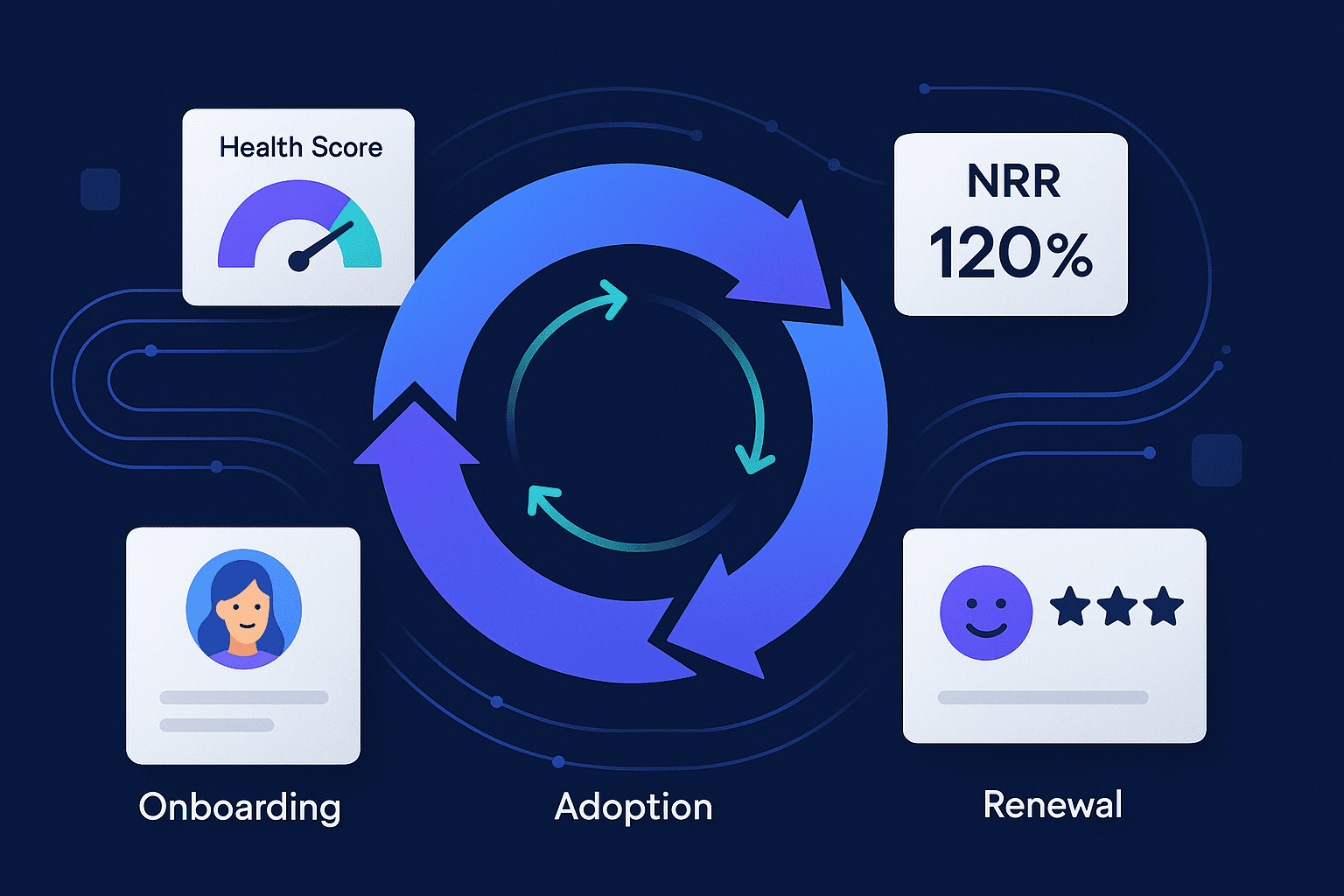
Net Revenue Retention (NRR) is the single most important metric for marketplace ISVs because it measures the combined impact of retention, expansion, and contraction on your existing customer base. An NRR above 100% means your existing customers are generating more revenue this period than last period, even before accounting for new customer acquisition.
Best-in-class marketplace ISVs achieve NRR of 120% or higher, driven by a combination of strong gross retention and active expansion.
To improve NRR, focus on three levers simultaneously. First, reduce gross churn by addressing the systemic causes identified through cancellation post-mortems and health score monitoring.
Second, increase expansion revenue by structuring pricing tiers that incentivize growth and by proactively helping customers discover new use cases.
Third, minimize contraction by intercepting downgrades early and offering creative alternatives that preserve revenue while addressing customer concerns. These three levers are not independent; improvements in customer success and satisfaction simultaneously reduce churn, increase expansion propensity, and prevent contraction.
Building a Feedback Loop Between CS and Marketplace Operations
The most effective marketplace ISVs operate a tight feedback loop between their customer success function and their marketplace operations team. CS teams have direct insight into why customers succeed or fail, what features drive engagement, and what pricing structures create friction.
Marketplace operations teams control listing content, pricing configuration, private offer terms, and partnership strategy. When these functions operate in silos, the marketplace listing and pricing evolve without customer context, and CS strategies are uninformed by marketplace dynamics.
Establish structured feedback channels that flow in both directions. CS should report customer insights to marketplace operations on a monthly cadence, including common feature requests, pricing objections, competitive threats, and onboarding friction points.
Marketplace operations should share listing performance data, conversion metrics, and pricing experiment results with CS. Joint quarterly reviews should align both functions on retention and expansion targets, identify systemic issues, and prioritize corrective actions.
Drive Retention and Growth with Automatum
Managing customer success and retention across multiple cloud marketplaces demands unified visibility into subscription data, usage metrics, billing patterns, and customer engagement signals. When these data points are scattered across AWS, Azure, and GCP consoles, your CS team lacks the complete picture needed to proactively identify churn risk and drive expansion.
Automatum consolidates marketplace analytics, subscription management, and customer data into a single platform purpose-built for ISVs selling on cloud marketplaces. With real-time visibility into entitlement status, usage trends, and renewal timelines across all three major marketplaces, your customer success team can identify at-risk accounts early, execute data-driven renewal strategies, and manage upsell opportunities through automated private offers.
Automatum's integrated metering, analytics, and private offer capabilities ensure that your CS strategy is informed by the same data that drives your marketplace operations.
Whether you are building your first marketplace CS program or scaling retention operations across a growing multi-cloud customer base, Automatum provides the infrastructure to keep customers engaged, growing, and renewing. Visit automatum.io to learn how top-performing ISVs are achieving NRR above 120% on cloud marketplaces.
Automatum simplifies cloud marketplace operations across AWS, Azure, and GCP.
Book a Working Session →Frequently Asked Questions
Common questions about the topics covered in this guide.
What are the biggest churn signals for marketplace customers?
Key churn signals include declining product usage, procurement calendar timing as renewal approaches, competitive evaluation activity, loss of the internal champion, and unresolved support tickets during the final quarter.
What is a good net revenue retention rate for marketplace?
Top-performing marketplace ISVs achieve 120 to 130 percent NRR through expansion revenue. The median is around 110 percent. NRR below 100 percent indicates a retention problem that must be addressed before scaling.
How should I structure a marketplace renewal playbook?
Start 120 days before expiration with a usage and value review. At 90 days, confirm renewal intent and discuss expansion. At 60 days, prepare the renewal private offer. At 30 days, send and get acceptance.
How do I upsell marketplace customers?
Use product usage data to identify expansion opportunities. Present upsell as a new private offer with upgraded pricing. Position the expansion against the customer's committed spend to make it budget-neutral.
Keep building your marketplace motion
Retention and growth guides for marketplace sellers.