



The Operational Reality of Multi-Cloud Marketplace Selling
Listing your software on a single cloud marketplace is a meaningful go-to-market milestone. Listing on all three major cloud marketplaces, AWS, Azure, and GCP, is an entirely different operational challenge.
Each marketplace has its own listing process, pricing framework, offer management system, metering API, analytics dashboard, and partner program requirements. What starts as a strategic initiative to maximize buyer reach quickly becomes an operational burden that can consume your team's time and attention if not managed systematically.
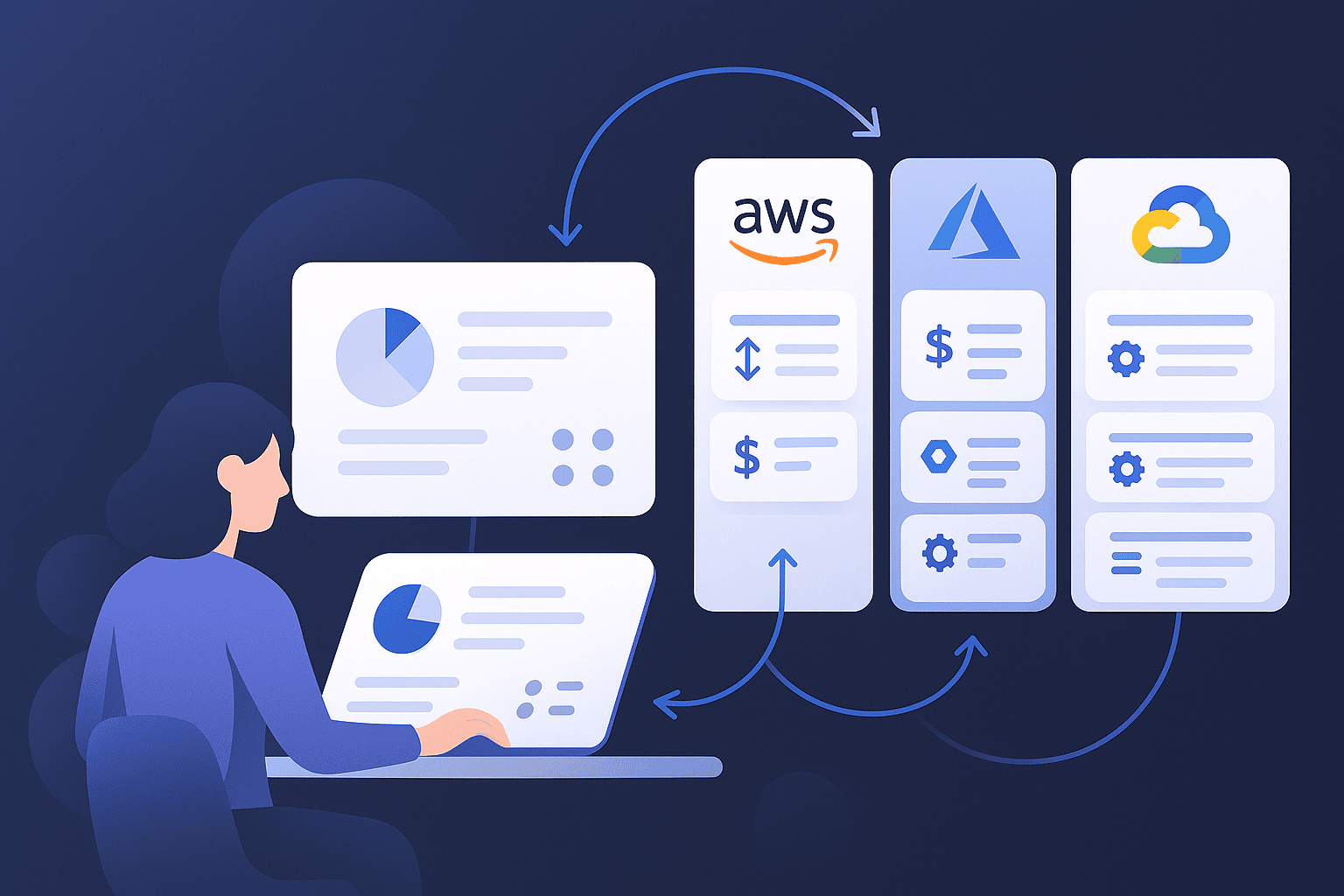
The pressure to go multi-cloud is real and growing. Enterprise buyers increasingly operate in multi-cloud environments, and their procurement teams want the flexibility to purchase your software through whichever marketplace aligns with their primary cloud commitment.
A 2025 Flexera State of the Cloud report found that 87% of enterprises have a multi-cloud strategy, and 73% of those enterprises prefer to consolidate software procurement through the marketplace of their primary cloud provider. If you are only listed on one marketplace, you are invisible to buyers whose committed spend lives on the other two.
This guide addresses the operational complexity of multi-cloud marketplace management head-on. We cover the common pain points that ISVs encounter, the organizational structures and processes that successful multi-cloud sellers have adopted, and the tools and automation strategies that make multi-cloud operations sustainable at scale.
Whether you are expanding from one marketplace to three or optimizing an existing multi-cloud presence, the frameworks here will help you build a marketplace operations function that scales with your business.
Common Pain Points in Multi-Cloud Marketplace Operations
Before diving into solutions, it is important to acknowledge the specific challenges that make multi-cloud marketplace operations difficult. Understanding these pain points helps you prioritize your operational investments and set realistic expectations for your team.
If you want a faster path through the analysis, the Cloud GTM Maturity Score is free and takes under five minutes to score your cloud go-to-market readiness in under five minutes.
Version Synchronization
Each cloud marketplace has its own listing lifecycle, review process, and deployment mechanism. When you release a new version of your software, you need to update your listing on each marketplace separately, submit each update for review independently, and manage different approval timelines across platforms.
AWS Marketplace typically processes listing updates within two to five business days.
Azure Marketplace reviews can take five to ten business days depending on the complexity of changes. GCP Marketplace reviews vary by product type.
These different timelines mean your customers on different clouds may have access to different versions of your software at any given time, creating support complexity and customer confusion.
Pricing Parity and Drift
Maintaining consistent pricing across three marketplaces is harder than it sounds. Each marketplace has different pricing structures, different support for pricing models (per-unit, usage-based, tiered, committed), and different fee structures that affect your net margins.
A pricing change that requires a simple configuration update on one marketplace may require a complete listing revision and re-review on another.
Over time, small inconsistencies accumulate: a promotional price that was removed on AWS but not on Azure, a new pricing tier that was added to GCP but not propagated to the other platforms, or a currency conversion difference that creates arbitrage opportunities. Pricing drift erodes buyer trust and creates internal confusion for your sales team.
Offer Management Fragmentation
Private offers are the primary mechanism for enterprise marketplace deals, and managing them across multiple clouds is one of the most operationally intensive aspects of multi-cloud selling. Each marketplace has its own private offer creation process, different fields and parameters, different expiration policies, and different buyer acceptance workflows.
If your enterprise sales team is managing dozens of active private offers across three marketplaces simultaneously, the risk of errors, missed expirations, and inconsistent terms increases with every additional deal.
Disconnected Analytics
Each marketplace provides its own analytics dashboard with its own metrics definitions, data refresh cadences, and export formats. AWS Marketplace provides disbursement reports and subscriber data through the AWS Marketplace Commerce Analytics Service.
Azure Marketplace delivers revenue and usage analytics through Partner Center.
GCP Marketplace offers reporting through the Producer Portal. Building a unified view of your marketplace performance requires extracting data from three different systems, normalizing metrics definitions, and consolidating reports into a single source of truth.
Without this consolidation, you are making strategic decisions based on fragmented, potentially inconsistent data.
Comparing Operational Requirements Across Marketplaces
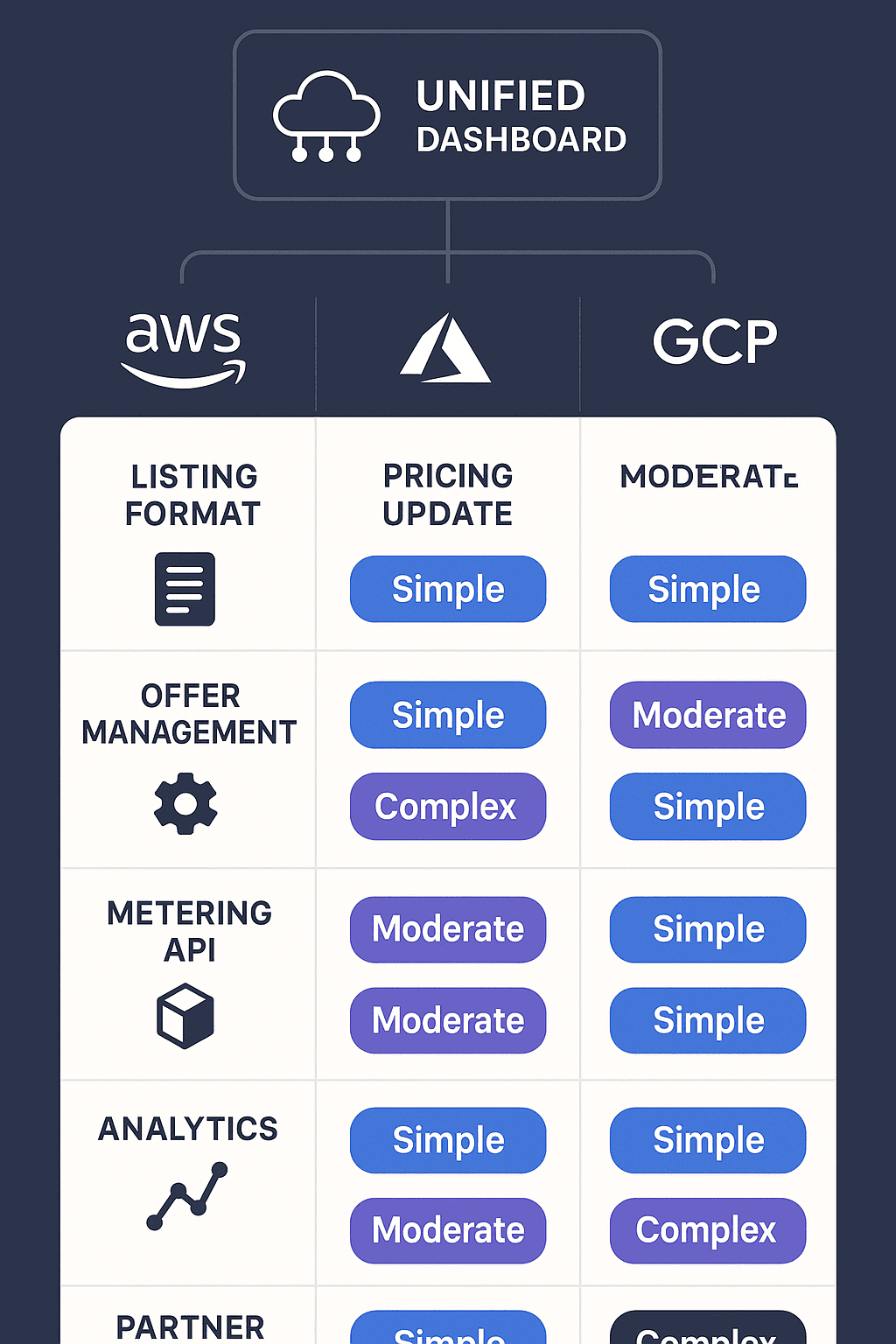
The following table provides a detailed comparison of the operational requirements and characteristics of each major cloud marketplace. Understanding these differences is essential for designing operational processes that work across all three platforms.
| Operational Area | AWS Marketplace | Azure Marketplace | GCP Marketplace |
|---|---|---|---|
| Listing Review Time | 2-5 business days | 5-10 business days | 3-7 business days |
| Private Offer Creation | Seller Portal or API | Partner Center | Producer Portal |
| Private Offer Expiration | Configurable (default 30 days) | Configurable (default 30 days) | Configurable (default 30 days) |
| Metering API | Marketplace Metering Service | Marketplace Metered Billing | Procurement API + Service Control |
| Metering Granularity | Hourly | Hourly or daily | Hourly |
| Revenue Reporting | Commerce Analytics Service | Partner Center Analytics | Producer Portal Reports |
| Disbursement Cadence | Monthly (Net 30-90) | Monthly (Net 30-60) | Monthly (Net 30) |
| Marketplace Fee | 3-5% (varies by program) | 3% standard | 3% standard |
| Co-Sell Program | ISV Accelerate (ACoS) | IP Co-Sell (MACC eligible) | Partner Advantage |
| SaaS Integration | SaaS Contracts + Subscriptions API | SaaS Fulfillment API v2 | Procurement API |
| CPPO Support | Channel Partner Private Offers | Multiparty Private Offers | Channel offers (limited) |
| Buyer Committed Spend | EDP (Enterprise Discount Program) | MACC (Azure Consumption Commitment) | CUD (Committed Use Discounts) |
These differences compound as your listing portfolio grows. Each additional product you list multiplies the operational surface area across all three platforms.
An ISV with five products listed on all three marketplaces is effectively managing fifteen separate listings, each with its own lifecycle, pricing configuration, and operational requirements.
Building a Marketplace Operations Team
Multi-cloud marketplace operations require dedicated attention from people who understand both the technical and commercial aspects of marketplace selling. As your marketplace presence scales, ad-hoc management by your product or sales team becomes unsustainable, and you need to formalize the marketplace operations function.
Core Roles
At a minimum, an effective marketplace operations team includes the following capabilities, though in smaller organizations one person may cover multiple roles. A Marketplace Operations Manager owns the end-to-end listing lifecycle across all marketplaces, coordinates listing updates, manages private offer workflows, and ensures pricing consistency.
A Marketplace Technical Lead manages the technical integrations including SaaS fulfillment APIs, metering implementation, and deployment automation.
This person ensures that your product's technical marketplace integration works reliably across all three clouds. A Marketplace Analyst owns analytics, reporting, and data consolidation across marketplaces.
They build unified dashboards, track performance metrics, and provide the data-driven insights that inform marketplace strategy decisions.
Organizational Placement
Where the marketplace operations team sits matters. Some companies place it within partnerships or alliances, others within revenue operations for tighter sales integration, and some create a standalone marketplace business unit with its own P&L. The key principle is that marketplace operations should not be a part-time responsibility buried within another function.
Scaling the Team
As a general benchmark, you need approximately one dedicated marketplace operations headcount for every $3 to $5 million in annual marketplace revenue, assuming moderate product complexity and enterprise deal volume. Below $1 million in marketplace revenue, one person can manage the function part-time alongside other responsibilities.
Between $1 million and $5 million, you need at least one full-time marketplace operations person.
Above $5 million, you should have a dedicated team with the specialized roles described above. These are guidelines, not rules; your specific headcount needs depend on the number of products listed, the volume of private offers, and the complexity of your metering and billing model.
Tools and Automation for Multi-Cloud Management
Manual processes do not scale across three marketplaces. ISVs who rely on spreadsheets, email threads, and manual portal interactions for marketplace operations hit a wall as their deal volume and product portfolio grow.
Investing in automation early pays compounding dividends as your marketplace business scales.
Listing Management Automation
Automate the listing update process as much as possible. Maintain your listing content, including product descriptions, screenshots, usage instructions, and pricing, in a single source of truth such as a content management system or a structured data repository.
When you make a change, automated workflows should propagate that change to all three marketplaces, generating the platform-specific formats required by each. This eliminates the manual work of updating three separate portals and reduces the risk of content drift between platforms.
Private Offer Workflow Automation
Private offers are the highest-volume, most error-prone workflow in marketplace operations. Automating private offer creation, tracking, and management reduces errors, accelerates deal velocity, and frees your operations team from repetitive manual work.
An effective private offer automation workflow accepts deal parameters from your CRM, generates the offer on the appropriate marketplace, tracks offer status and buyer acceptance, and alerts your sales team to expiring or accepted offers. This workflow should work consistently across all three marketplaces despite their different APIs and interfaces.
Metering Infrastructure
If your products use usage-based pricing, your metering infrastructure must be reliable, accurate, and consistent across all three marketplace platforms. Build a centralized metering pipeline that captures usage events from your application, normalizes them into a consistent format, and dispatches them to the appropriate marketplace metering API based on the customer's procurement channel.
Include reconciliation logic that compares your internal usage records with marketplace-reported consumption to catch discrepancies before they become billing disputes.
Unified Analytics Platform
Consolidate your marketplace analytics into a single platform that normalizes data from all three marketplaces. This platform should provide unified revenue dashboards, deal velocity metrics, customer acquisition and churn tracking, and pipeline visibility across all marketplaces.
Without this unified view, you are making strategic decisions based on fragmented, potentially inconsistent data.
Listing Lifecycle Management
Each marketplace listing goes through a lifecycle from initial creation to ongoing maintenance and eventual retirement. Managing this lifecycle consistently across three platforms requires documented processes and clear ownership.
Initial Listing Creation
Creating a new listing on each marketplace involves different requirements and review criteria. Develop a listing creation checklist that covers all three platforms, including the unique documentation, technical validation, and content requirements for each.
Assign a clear owner for the end-to-end creation process and set expectations for timeline: plan for the slowest marketplace's review cycle plus a buffer for revision requests. A realistic timeline for a new SaaS listing across all three marketplaces is six to twelve weeks from submission to live across all platforms.
Version Updates
When you release a new version, coordinate listing updates across all three platforms simultaneously. Submitting in parallel minimizes the version gap between marketplaces.
Document a version update runbook specifying what changes on each platform, who is responsible, and how to communicate version availability differences during review periods.
Pricing Changes
Pricing changes are particularly sensitive in multi-cloud environments because inconsistencies create buyer confusion and potential contract disputes. When implementing a pricing change, update all three marketplaces simultaneously, communicate the change to your sales team with marketplace-specific effective dates, and update all private offer templates to reflect the new pricing.
If review timelines mean the pricing change goes live on different dates across marketplaces, communicate the timeline transparently to affected customers and your sales team.
Listing Retirement
Each marketplace has different procedures for handling existing subscribers and removing listings. Plan retirements well in advance, communicate the timeline to affected customers on each platform, and ensure existing subscription obligations are honored through the contractually required period.
Metering and Billing Across Clouds
Usage-based billing introduces significant operational complexity in multi-cloud environments. Each marketplace has its own metering API, its own data format requirements, its own reporting cadence, and its own dispute resolution process.
Building a strong multi-cloud metering operation requires investment in both technical infrastructure and operational processes.
Metering Architecture Patterns
The most common architecture for multi-cloud metering uses a centralized metering service that captures all usage events regardless of the customer's procurement channel. A dispatching layer then routes metering records to the appropriate marketplace API based on the customer's marketplace identity.
Implement idempotent metering submission to handle retries gracefully, since marketplace metering APIs are not always available. Use unique metering record identifiers and maintain a submission log that tracks the status of every metering record across all three marketplaces.
Billing Reconciliation
Each marketplace generates its own billing statements and disbursement reports. Reconciling these reports against your internal usage records is essential for financial accuracy and for resolving any discrepancies before they reach the customer.
Build a monthly reconciliation process that compares your metering submissions with marketplace-reported consumption, identifies discrepancies above a defined threshold, and escalates unresolved differences to the appropriate marketplace support channel. Automate as much of this reconciliation as possible; manual reconciliation across three marketplaces does not scale beyond a handful of customers.
Analytics and Reporting Consolidation
Marketplace analytics are useless if they live in three separate dashboards that no one has time to check regularly. Consolidation is not a nice-to-have; it is a requirement for making informed strategic decisions about your marketplace business.
Key Metrics to Track
Track total marketplace revenue by cloud and product, monthly recurring revenue, deal velocity (days from private offer to acceptance), customer acquisition cost through marketplace channels, churn and expansion rates by marketplace, metering accuracy (variance between submitted and billed usage), and co-sell influenced revenue as a percentage of total. These metrics help you identify which marketplace delivers the best return on your operational investment.
Executive Reporting
Build a monthly executive report covering total marketplace revenue and growth rate, marketplace revenue as a percentage of total company revenue, deal pipeline across all marketplaces, and operational health metrics such as metering accuracy. This report should be generated automatically from your consolidated analytics platform, not assembled manually from three different data sources each month.
Incident Response for Marketplace Issues
Marketplace incidents, whether they involve a listing being suspended, a metering failure causing billing inaccuracies, or a private offer error affecting a customer, require fast, coordinated response across your operations, engineering, and customer success teams.
Common Incident Types
- Metering failures: Your metering pipeline stops submitting usage records to one or more marketplaces, causing customers to be underbilled or not billed at all. Response requires identifying the failure point, queuing unsubmitted records, and coordinating with the marketplace to process backlogged submissions.
- Listing suspension: A marketplace suspends your listing due to a compliance issue, a customer complaint, or a policy violation. Response requires immediate engagement with the marketplace support team, communication to affected customers, and remediation of the underlying issue.
- Private offer errors: An incorrect private offer is created with wrong pricing, wrong terms, or sent to the wrong buyer. Response requires revoking the incorrect offer, creating a corrected replacement, and communicating transparently with the buyer and your sales team.
- Fulfillment failures: A buyer accepts a marketplace offer but your fulfillment automation fails to provision their account or activate their subscription. Response requires manual provisioning, root cause analysis of the fulfillment failure, and follow-up to ensure the buyer's experience is not degraded.
Building an Incident Response Playbook
Document response procedures for each incident type, including escalation paths and resolution timelines. Assign a primary on-call contact with access to all three marketplace portals.
Review incident history quarterly to identify patterns and invest in preventive automation for recurring issues.
Scaling from Single to Multi-Cloud
If you are currently listed on one marketplace and considering expanding to two or three, take a phased approach that builds operational capability incrementally rather than trying to launch on all platforms simultaneously.
Phase 1: Optimize Your Primary Marketplace
Before adding complexity, ensure your operations on your primary marketplace are mature. Your listing should be up to date, your private offer workflow should be efficient, your metering should be reliable, and your analytics should be providing actionable insights.
The operational processes you build for one marketplace become the template for the others. If your single-marketplace operations are chaotic, multi-cloud will amplify that chaos rather than resolving it.
Phase 2: Add the Second Marketplace
Choose your second marketplace based on where your buyers are. Focus on adapting your existing processes rather than building new ones from scratch.
This is when you should invest in centralized listing management and unified analytics, because the moment you have two marketplaces, the need for consolidation becomes urgent.
Phase 3: Complete the Trifecta
Adding the third marketplace should be operationally routine if you built the right foundation in phases one and two. If it feels like starting from scratch, that signals your operational foundation needs strengthening.
The Role of Marketplace Management Platforms
As the multi-cloud marketplace ecosystem has matured, a category of marketplace management platforms has emerged to help ISVs manage the operational complexity of selling across multiple clouds. The value proposition increases with your operational scale: an ISV with one product on one marketplace can manage operations manually, but an ISV with five products across three marketplaces processing dozens of private offers monthly needs automation and consolidation that manual processes cannot provide.
How Automatum Simplifies Multi-Cloud Marketplace Operations
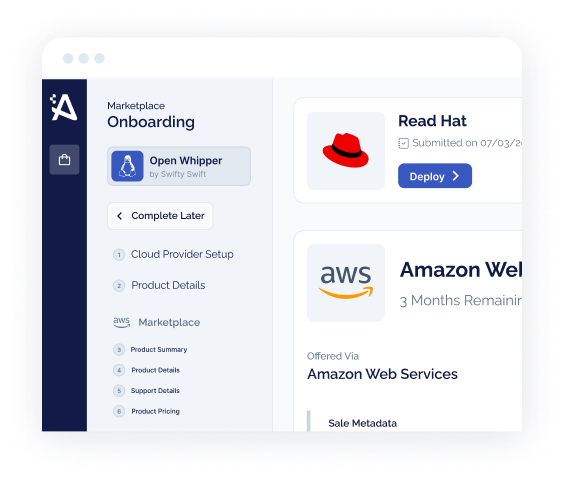
Automatum is built specifically for the operational challenges described throughout this guide. Our platform provides ISVs with a single pane of glass for managing listings, private offers, metering, and analytics across AWS, Azure, and GCP marketplaces.
Instead of logging into three separate portals, maintaining three separate workflows, and reconciling three separate data sources, your marketplace operations team works from one unified platform that handles the cross-cloud complexity behind the scenes.
With Automatum, listing updates propagate across marketplaces from a single source of truth. Private offers are created, tracked, and managed through a unified workflow regardless of the target marketplace.
Metering data is consolidated and dispatched to the correct marketplace API automatically.
Analytics and revenue reporting are normalized across all three clouds into a single dashboard that your leadership team can actually use. And co-sell opportunities are tracked across partner programs without requiring your team to maintain separate workflows for each cloud provider.
If you are an ISV managing or planning to manage marketplace listings across multiple clouds, visit automatum.io to see how our platform can eliminate the operational overhead of multi-cloud marketplace selling and help your team focus on what matters most: growing your marketplace revenue.
Automatum simplifies cloud marketplace operations across AWS, Azure, and GCP.
Book a Working Session →Frequently Asked Questions
Common questions about the topics covered in this guide.
How do I keep marketplace listings in sync across clouds?
Maintain a single source of truth for product descriptions, pricing, and feature lists. Use a marketplace management platform or documented process to propagate changes across all three marketplaces simultaneously.
Do I need dedicated headcount for marketplace operations?
Yes, once you have listings on more than one marketplace. A single marketplace operations manager can handle two to three marketplaces. Above three products or frequent private offers, you need additional support or a platform.
How do I reconcile metering data across marketplaces?
Each marketplace has its own metering API and billing cycle. Reconcile your internal usage records against each marketplace's reporting monthly. Discrepancies must be caught and resolved before they become billing disputes.
What tools do I need for multi-cloud marketplace management?
At minimum you need a unified dashboard for listings and private offers, centralized metering reconciliation, consolidated revenue reporting, and co-sell tracking across partner programs. Automatum provides all of these.
Keep building your marketplace motion
Multi-cloud marketplace strategy and operations guides.