



Two Platforms, Very Different Bets on How ISVs Should Go to Market
Automatum and Labra both solve the same core problem: getting your SaaS product listed and transactable on cloud marketplaces without drowning your engineering team. But they approach it from opposite ends.
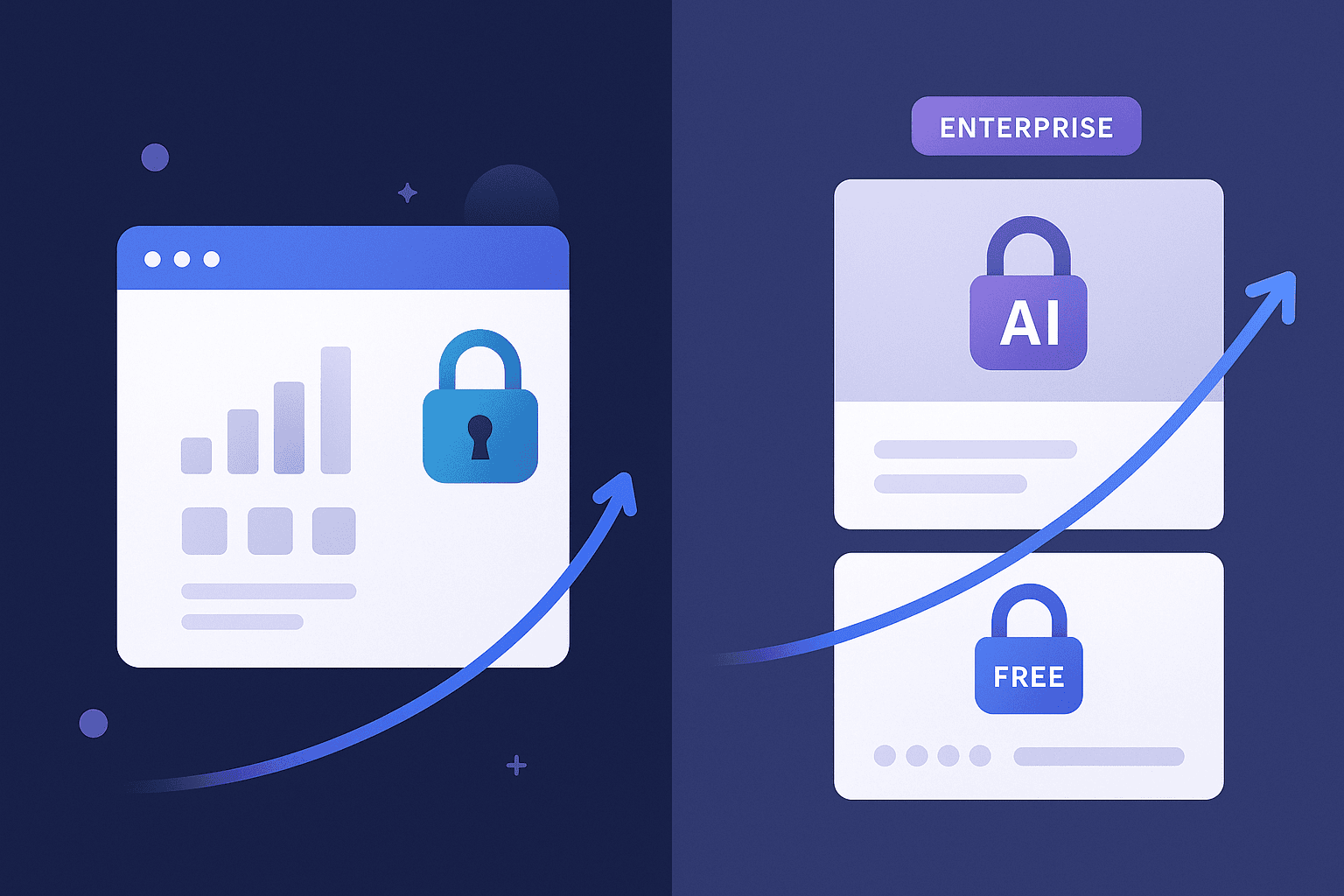
Labra leads with a free tier and bets on upselling you into AI-powered automation as you scale.
Automatum gives you the full platform from day one at a flat, predictable price. Neither approach is universally better. The right choice depends on your revenue stage, your team size, and how much you care about predictable costs versus a low entry point.
We built Automatum, so we have obvious bias here. We will try to be straight with you anyway. Labra's free tier is genuinely useful for early-stage companies testing marketplace as a channel.
But there are real trade-offs behind that $0 price tag that most comparison posts gloss over. This post covers them honestly.
Company Background: Who Built What and Why It Matters
Labra was founded around 2020 and has focused heavily on AI-powered marketplace automation since its inception. Their thesis is that marketplace operations should be as automated as possible, with their SmartGTM AI engine handling listing optimization, buyer intent signals, and co-sell recommendations.
They support AWS, Azure, and GCP. Their team has built strong partnerships with cloud provider marketplace teams, and their product reflects deep knowledge of the ecosystem.
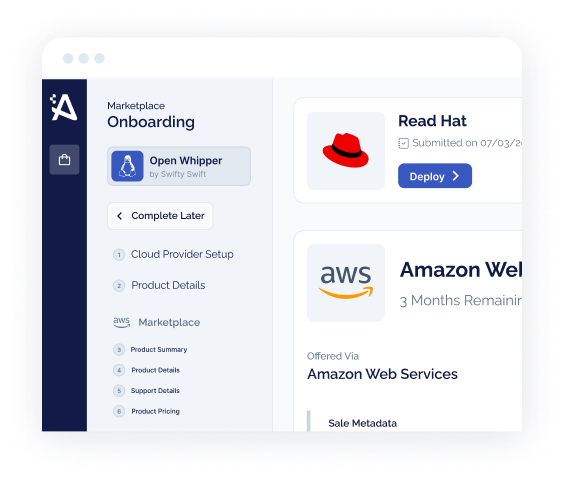
Automatum took a different path. We focused on eliminating engineering effort entirely across all tiers and all clouds. No code required to list, no API integration needed from your side, no developer time spent on marketplace plumbing.
We support AWS, Azure, GCP, and Red Hat Marketplace. Over 60 ISVs have listed through the platform. Our pricing is flat and tier-based, which means your costs do not change as your marketplace revenue grows.
These founding philosophies create meaningfully different products. Labra optimized for intelligence and automation at the high end. Automatum optimized for speed and accessibility across the board.
Pricing: The Real Comparison
Pricing is where these two platforms diverge most sharply, and it is the first thing most teams evaluate. Here is how the tiers stack up as of early 2026.
Labra offers four tiers. Their Free tier covers AWS Marketplace only and lets you transact up to $100K before you need to upgrade. It includes basic listing support and a self-service dashboard.
The Starter tier (pricing available on request, typically mid-four-figures annually) adds Azure support, basic CRM integrations, and removes the transaction cap. The Growth tier adds GCP, advanced reporting, and priority support.
The Enterprise tier unlocks SmartGTM AI, custom integrations, dedicated CSM, and co-sell automation.
Automatum also offers four tiers. Free includes one AWS listing with basic support. Starter is $499/month with multi-cloud support, CRM integrations, and up to 3 listings.
Growth is $999/month with unlimited listings, co-sell features, advanced analytics, and priority support. Enterprise is custom-priced with dedicated onboarding, custom integrations, and SLA guarantees.
The key difference: Automatum charges flat monthly fees with no revenue share and no transaction caps on any paid tier. Labra's free tier has a $100K transaction ceiling, and their paid tiers reportedly include transaction-based components at certain levels.
When your marketplace revenue scales, the cost difference compounds quickly.
Feature-by-Feature Comparison
Words are easy. Here is the table.
| Feature | Automatum | Labra |
|---|---|---|
| Free Tier | 1 AWS listing, basic support | AWS only, up to $100K transacted, self-service |
| Starter Pricing | $499/mo flat | Mid-four-figures/year (contact sales) |
| Growth Pricing | $999/mo flat | Contact sales |
| Enterprise Pricing | Custom | Custom |
| Revenue Share | None on any tier | None on Free; transaction components on higher tiers (varies) |
| Marketplaces Supported | AWS, Azure, GCP, Red Hat | AWS, Azure, GCP |
| AI Features | Included across tiers (listing optimization, analytics) | SmartGTM AI gated to Enterprise tier |
| CRM Integration | HubSpot + Salesforce on Starter+ | Basic CRM on Starter, advanced on Growth+ |
| Co-Sell Support | ACE (AWS) + Azure referrals on Growth+ | Co-sell automation on Enterprise only |
| Private Offers | Full CPPO + standard on all paid tiers | Available on Starter+, CPPO on Growth+ |
| Metering | Usage-based metering on all paid tiers | Basic metering on Starter, advanced on Growth+ |
| Implementation Speed | First listing live in 2-4 weeks (no engineering) | Free tier: self-service, 4-8 weeks; Paid: 3-6 weeks with onboarding |
| Engineering Required | Zero on all tiers | Minimal on paid tiers; some API work on Free |
| Dedicated CSM | Growth+ tiers | Enterprise only |
A few things jump out from this table. Labra gates their most compelling feature, SmartGTM AI, behind the Enterprise tier.
If AI-driven marketplace optimization is why you are looking at Labra, you are paying Enterprise prices to get it. Automatum distributes its intelligence features across all tiers, which means a Starter customer gets listing optimization and analytics that Labra reserves for its highest-paying users.
The Red Hat Marketplace support is a smaller detail but matters for ISVs selling into enterprises that standardize on OpenShift and Red Hat infrastructure. Labra does not cover that marketplace.
Labra's Free Tier: What You Actually Get
We should be fair about this because Labra's free tier is a legitimate offering, not a gimmick. If you are an early-stage ISV exploring whether cloud marketplace is a viable channel, the ability to list on AWS and transact up to $100K without paying a platform fee is genuinely valuable.
It lowers the barrier to testing marketplace as a distribution channel to nearly zero.
Here is what you get: a self-service dashboard, basic listing creation tools for AWS Marketplace, and the ability to handle standard subscriptions and contract-based deals. For a seed-stage company with one product and one marketplace, this is enough to validate whether marketplace buyers exist for your category.
Here is what you do not get: Azure or GCP support, CRM integrations, co-sell program management, advanced private offer workflows, AI-powered listing optimization, or dedicated onboarding support. You also face the $100K transaction ceiling.
Once you cross it, you must upgrade to a paid tier or stop transacting through marketplace.
The $100K cap is the important detail. If your product sells for $50K annually, you get two deals before hitting the ceiling.
For higher ACV products, the free tier is essentially a trial. That is fine if you understand it going in, but it means Labra's free tier is not a long-term solution for any company that succeeds on marketplace.
Labra's SmartGTM AI: Impressive but Gated
Labra has invested heavily in their SmartGTM AI engine, and from what we have seen, it is genuinely sophisticated. It analyzes marketplace buyer signals, recommends pricing adjustments, identifies co-sell opportunities, and automates portions of the listing optimization process.
For high-volume marketplace sellers managing dozens of listings across multiple clouds, this kind of automation has real value.
The catch is access. SmartGTM is an Enterprise-tier feature.
Labra does not publish Enterprise pricing, but based on what we have heard from ISVs who have evaluated both platforms, Enterprise contracts start in the mid-five-figures annually. That is a meaningful commitment, and it means the AI capabilities that differentiate Labra from other platforms are only available to companies already generating significant marketplace revenue.
If you are evaluating Labra primarily for SmartGTM, make sure you are comparing the Enterprise tier price against what you would pay for Automatum Growth or Enterprise, where comparable (though different) intelligence features are included.
Implementation Speed: Where Automatum Pulls Ahead
Time-to-list is one of the most underrated factors in platform selection. Every week you spend setting up your marketplace presence is a week you are not generating marketplace revenue or qualifying for co-sell programs.
Automatum's architecture was built around zero-engineering implementation. You provide your product information, pricing structure, and branding assets.
The platform handles the technical listing creation, the marketplace API integration, the metering setup, and the submission to the cloud provider for review. Most ISVs have their first listing live within 2-4 weeks, and that timeline includes the cloud provider's own review process, which we cannot control.
Labra's implementation timeline varies by tier. The free tier is self-service, which means you are navigating the listing process with documentation and a dashboard but without hands-on onboarding support.
ISVs report that self-service listing through the free tier takes 4-8 weeks, with most of the time spent learning the marketplace submission requirements. Paid tiers include onboarding support and typically land in the 3-6 week range.
The difference is not dramatic on paid tiers, but the zero-engineering requirement on Automatum is meaningful. Labra's free tier requires some API integration work on your side for metering and subscription handling.
Paid tiers reduce but do not completely eliminate the engineering touchpoints.
Automatum removes them entirely, on every tier. If your engineering team is small or fully allocated to product work, this distinction matters more than anything else on the comparison table.
Multi-Cloud Strategy: Where Each Platform Stands
Most ISVs start with one marketplace and add others within 12-18 months. Your platform choice should account for where you are going, not just where you are today.
Automatum supports AWS, Azure, GCP, and Red Hat Marketplace. All four marketplaces are available on paid tiers, and the platform manages the cross-cloud differences internally.
You do not need to learn the idiosyncrasies of each provider's listing process, metering API, or private offer workflow. The platform abstracts those differences behind a unified interface.
Labra supports AWS, Azure, and GCP. Three marketplaces is the standard for cloud GTM platforms, and Labra handles all three well at their Growth and Enterprise tiers. The free tier is AWS-only, and Starter adds Azure. GCP comes in at Growth tier.
The practical difference is Red Hat Marketplace support and the tier-gating of multi-cloud. If you need Red Hat, Automatum is your only option between these two platforms.
If you are on Labra's free or Starter tier and want to add GCP, you are looking at an upgrade to Growth. On Automatum, all paid tiers include all four marketplaces.
Co-Sell and Partner Programs
Co-sell is where marketplace revenue gets serious. AWS ISV Accelerate (ACE) and Azure co-sell programs connect your sales team with cloud provider field reps who can champion your product in active deals.
ISVs in mature co-sell programs report that co-sell-influenced deals close 30-50% faster and at 20-40% higher ACV than direct deals.
Automatum includes co-sell management for both ACE and Azure referrals on Growth tier and above. The platform handles opportunity submission, status tracking, and the back-and-forth with cloud provider partner teams.
Your sales team works within the Automatum dashboard rather than navigating the AWS Partner Central or Azure Partner Center UIs directly.
Labra gates co-sell automation to Enterprise tier. Lower tiers can access co-sell programs, but without the automated workflow management.
This means your team is manually managing co-sell opportunities through the cloud provider's own interfaces, which is workable but time-consuming at scale.
If co-sell is a core part of your go-to-market strategy, the tier at which co-sell management becomes available should be a weighted factor in your evaluation.
CRM Integration
Marketplace deals need to flow into your CRM. Your sales team should not be manually copying deal data from a marketplace dashboard into HubSpot or Salesforce. Both platforms offer CRM integrations, but the depth and tier availability differ.
Automatum integrates with HubSpot and Salesforce starting at the Starter tier ($499/month). Marketplace deals, private offers, and customer data sync bidirectionally. Your sales team sees marketplace pipeline alongside direct pipeline in a single view.
Labra offers basic CRM integration at the Starter tier, with deeper integration and customization at Growth and Enterprise. The specifics of what constitutes basic versus advanced CRM integration vary, so it is worth asking Labra's sales team for explicit detail on what syncs at which tier.
When to Choose Labra
Labra is the right choice in several specific scenarios, and we would be dishonest to pretend otherwise.
You are pre-revenue on marketplace and want to test the channel with zero financial commitment. Labra's free tier lets you list on AWS and transact up to $100K without paying anything. If you are genuinely uncertain whether marketplace is a viable channel for your product, this is the lowest-risk way to find out.
Automatum's free tier also covers one AWS listing, but Labra's self-service approach may feel more natural if you have some technical comfort with marketplace APIs.
You are an Enterprise-scale ISV generating significant marketplace revenue and want AI-powered optimization. If you are transacting millions through marketplace annually and have the budget for an Enterprise-tier platform, Labra's SmartGTM AI is a differentiator worth evaluating. The automated buyer intent signals, pricing recommendations, and co-sell intelligence are features that Labra has invested heavily in, and they are most valuable at scale.
You have engineering resources available for marketplace integration work. Labra's architecture, particularly at lower tiers, expects some engineering involvement. If your team has available engineering capacity and prefers a platform that gives them more control over the integration details, Labra's approach may be a better cultural fit than Automatum's fully managed model.
When to Choose Automatum
Automatum is the right choice in a different but often larger set of scenarios.
You have a small engineering team and cannot spare any cycles for marketplace infrastructure. This is the most common reason ISVs choose Automatum. If your engineering team is under 30 people, fully allocated to product development, and you cannot justify pulling anyone off the roadmap for marketplace integration work, Automatum's zero-engineering approach is not a nice-to-have.
It is the only realistic path to getting listed.
You want predictable costs that do not scale with marketplace revenue. Automatum's flat monthly pricing means your marketplace platform cost stays the same whether you transact $100K or $10M. There is no revenue share, no transaction fee, no surprise cost increase as your marketplace channel succeeds.
For companies building marketplace into their financial models, this predictability is worth a premium over a free-to-start model that becomes more expensive at scale.
You need multi-cloud from day one. If your customers buy on AWS and Azure (or all three major clouds), Automatum gives you all marketplaces on every paid tier. You do not need to negotiate an upgrade to access your second or third marketplace.
You want co-sell and CRM integration without paying Enterprise prices. On Automatum, co-sell management starts at Growth ($999/month) and CRM integration starts at Starter ($499/month). On Labra, co-sell automation requires Enterprise, and CRM depth increases with tier.
If these features matter to your go-to-market motion but your budget is mid-market, not enterprise, Automatum makes them accessible.
You need Red Hat Marketplace. Simple. Labra does not support it. Automatum does.
The Pricing Math at Scale
Here is a scenario that illustrates how the pricing models diverge over time.
Assume you are an ISV that lists on AWS and Azure. In year one, you transact $500K through marketplace. In year two, you transact $2M. In year three, you transact $5M.
On Automatum Growth ($999/month), your platform cost is $11,988 per year. Every year. Regardless of transaction volume. Over three years, you pay $35,964 total.
On Labra, your year one cost depends on which tier you need. If you start on their free tier, you hit the $100K cap within a few months and need to upgrade.
The paid tier cost for comparable functionality (multi-cloud, CRM, reporting) is likely in the mid-four to low-five-figures annually, depending on the specific contract. If transaction-based components apply at higher volumes, your year two and three costs increase as your revenue scales.
The exact comparison requires getting a Labra quote for your specific situation. But the structural difference is clear: Automatum's cost is fixed, and Labra's cost has variable components that grow with your success.
Whether that growth is acceptable depends on the absolute numbers and your tolerance for variable vendor costs.
Automatum simplifies cloud marketplace operations across AWS, Azure, and GCP.
Book a Working Session →Frequently Asked Questions
Common questions about the topics covered in this guide.
How does Labra's free tier work?
Labra offers a free tier for basic marketplace listing management but gates advanced features like AI-powered co-sell insights behind paid tiers. Automatum uses transparent flat-rate pricing with all features included.
Which platform is better for private offer management?
Both platforms support private offer creation across AWS, Azure, and GCP. Automatum provides a unified private offer workflow. Labra's private offer management is available in paid tiers with additional AI-powered pricing recommendations.
How do the pricing models compare?
Automatum charges flat-rate pricing with no revenue share and all features included. Labra offers a free entry tier but requires paid upgrades for advanced features. Total cost depends on your feature requirements and deal volume.
Which platform has better marketplace analytics?
Both provide marketplace analytics. Automatum offers consolidated reporting across all three clouds. Labra provides AI-enhanced analytics in its paid tiers with predictive insights on deal velocity and conversion probability.
Keep building your marketplace motion
Compare cloud GTM platforms for your marketplace strategy.